Tacoma Tire Pressure Guide: Optimal PSI for On-Road and Off-Road
Azeem Iqbal
Azeem Iqbal
Complete Toyota Tacoma Tire Pressure Guide
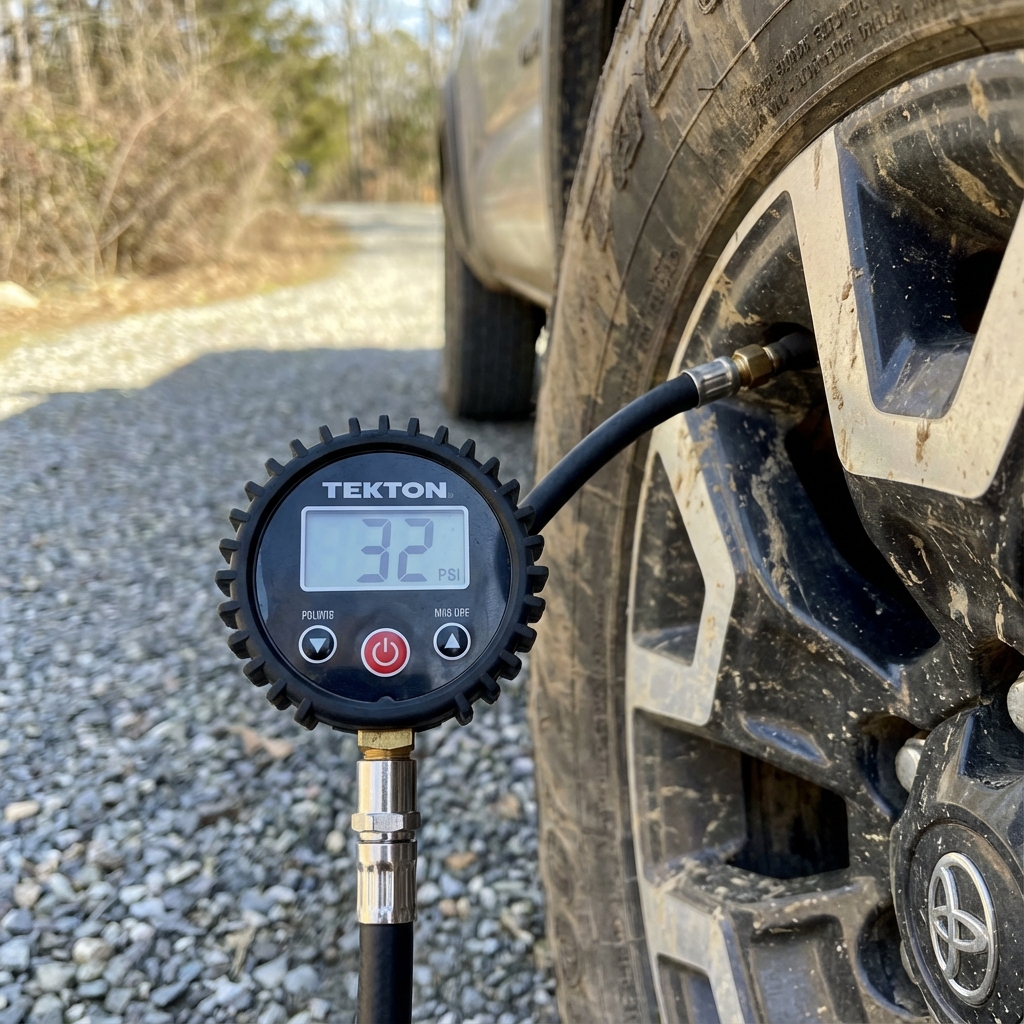
Tires are the only thing connecting your truck to the ground. You can spend thousands on suspension and wheels, but if your tire pressure (PSI) is wrong, your Tacoma will handle poorly, waste gas, and wear out tires unevenly.
Many owners assume the number on the door jamb (usually 30 PSI) is gospel. But the moment you switch from the stock passenger-rated (P-metric) tires to a heavier All-Terrain (LT-metric) tire, that number becomes irrelevant.
This guide will help you find the “Goldilocks” zone for your specific setup.
Why the Door Sticker Isn’t Always Right
The sticker on your door jamb assumes you are running the factory stock tires (usually P265/70R16 or P265/65R17). These are standard load tires designed for comfort.
Most Tacoma owners upgrade to LT (Light Truck) tires (Load C or Load E). These tires have:
- Thicker sidewalls (up to 10 plies for Load E).
- Higher maximum pressure ratings (up to 80 PSI).
- Greater weight capacity.
If you run a stiff 10-ply tire at the stock 30 PSI, the sidewall may not support the truck’s weight correctly, leading to heat buildup (the #1 killer of tires) and a “squishy” handling feel.
Optimal Street Pressure
While every truck is different (weight of armor, bed caps, gear), here are the general community standards for Tacoma tire pressure on pavement:
- Stock P-Rated Tires: Stick to 30-32 PSI.
- Load C Tires: Try 32-35 PSI.
- Load E Tires: Try 36-40 PSI.
Load E tires are very stiff. Running them higher (near 40) often helps mpg and handling resilience, but can make the ride stiff.
The “Chalk Test”: How to Find YOUR Perfect PSI
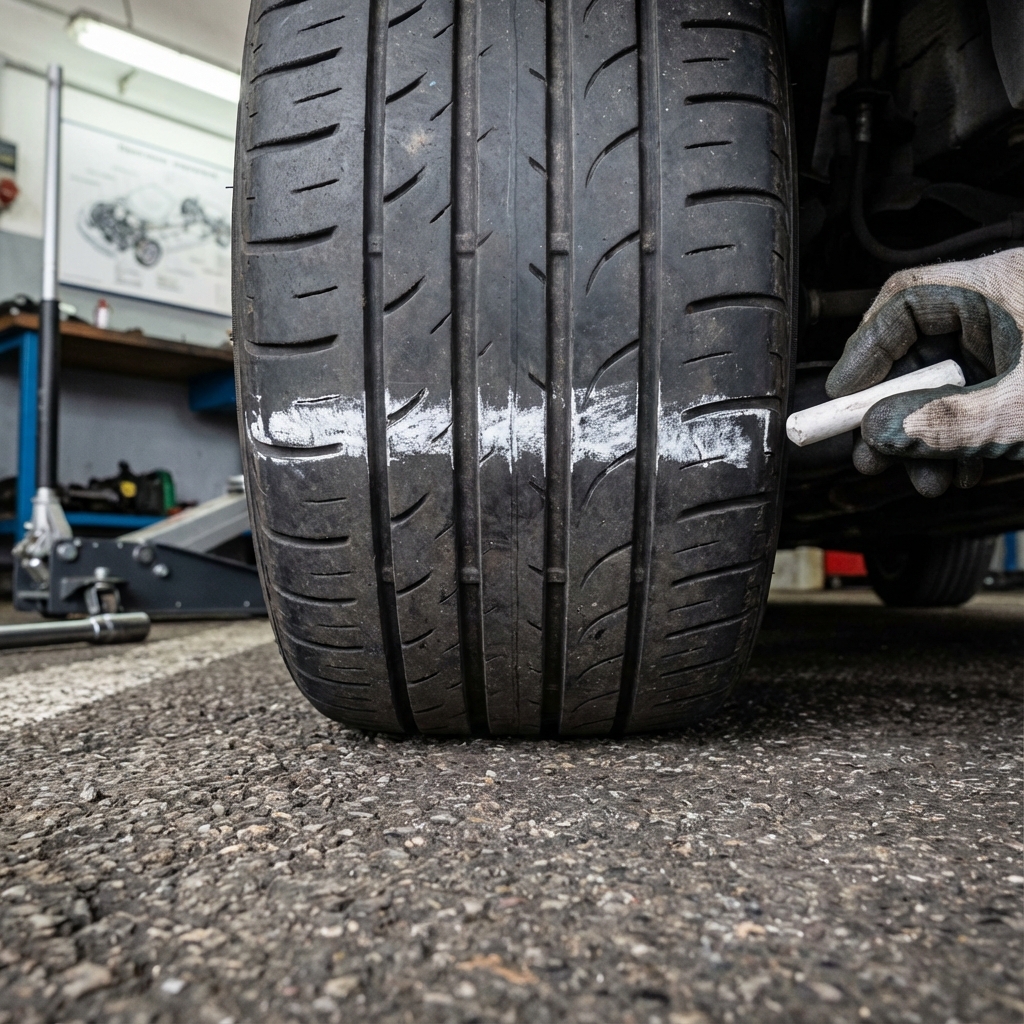
Don’t guess—test. The Chalk Test is the only way to know exactly what pressure your specific tires need for your specific truck weight.
- Find the Spot: Go to a flat, empty parking lot.
- Mark: Draw a thick line of white chalk across the width of your tire tread.
- Drive: Drive straight for about 50-100 feet. Do not turn sharply.
- Inspect:
- Center wore off? -> Overinflated. The tire is ballooning. Drop 2 PSI and re-test.
- Edges wore off? -> Underinflated. The tire is cupping. Add 2 PSI.
- Evenly worn? -> Perfect. You have full contact patch.
Off-Road Tire Pressure Guide (Airing Down)
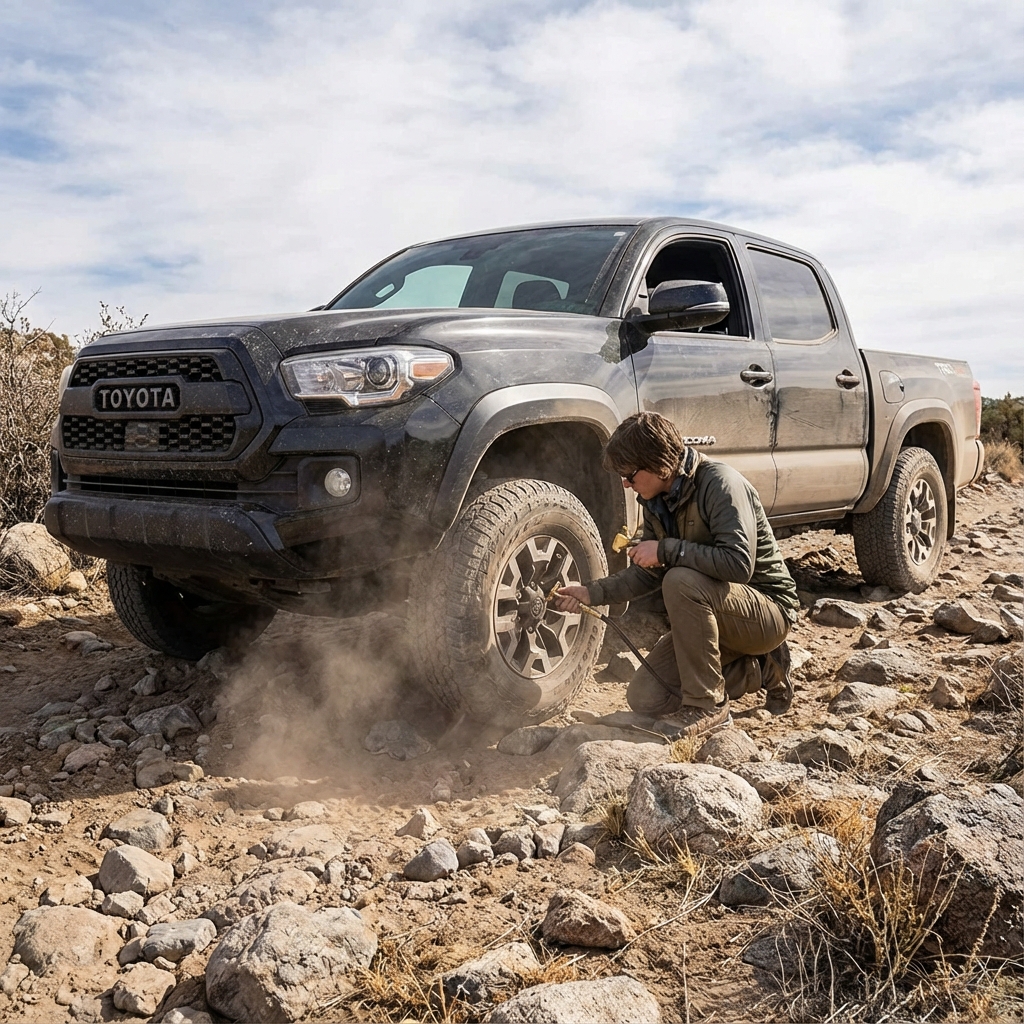
Off-road, high pressure is your enemy. “Airing down” increases your tire’s footprint (contact patch), giving you massively more grip and acting as a secondary suspension to absorb bumps.
Here is a cheat sheet for airing down your Tacoma:
1. Dirt Roads & Washboards (20-25 PSI)
Dropping just 10 PSI takes the harsh “rattle” out of washboard roads. Your suspension will thank you.
2. Moderate Trails & Rocks (15-20 PSI)
This is the sweet spot for most wheeling. The tire molds over rocks rather than bouncing off them, and puncture resistance improves because the tire can flex around sharp objects.
3. Deep Sand & Snow (10-15 PSI)
You need to float. At these pressures, your tire footprint elongates significantly. Caution: Driving aggressively below 12 PSI increases the risk of de-beading (tire popping off the rim).
Conclusion
Tire pressure is the cheapest performance mod you can do. For a stock Tacoma, 30-32 PSI is fine. But if you’ve upgraded to aggressive All-Terrains, grab some chalk, spend 10 minutes testing, and unlock better handling and longer tread life today.
? Frequently Asked Questions
What is the correct tire pressure for a Toyota Tacoma?
How low should I air down my Tacoma tires for off-roading?
Do I need to change tire pressure for E-load tires?
What is the chalk test for tire pressure?
Why is my tire pressure light (TPMS) on after getting new tires?

About Azeem Iqbal
We are dedicated to providing accurate, easy-to-understand information. Our goal is to help you make informed choices for your vehicle.